Heads Up: The $800 Price Tag on Twenty Years of Audacity
Buckle up, this one involves literal abandonment and acute financial stress. Expect a friendship-ending confrontation that will leave you staggering at the sheer entitlement on display.
Meet our main character: a 31-year-old woman who finally ran out of patience for her best friend’s decades-long, pathetic crusade for a groom’s attention.
The Full Story: How Much Does the Truth Cost?
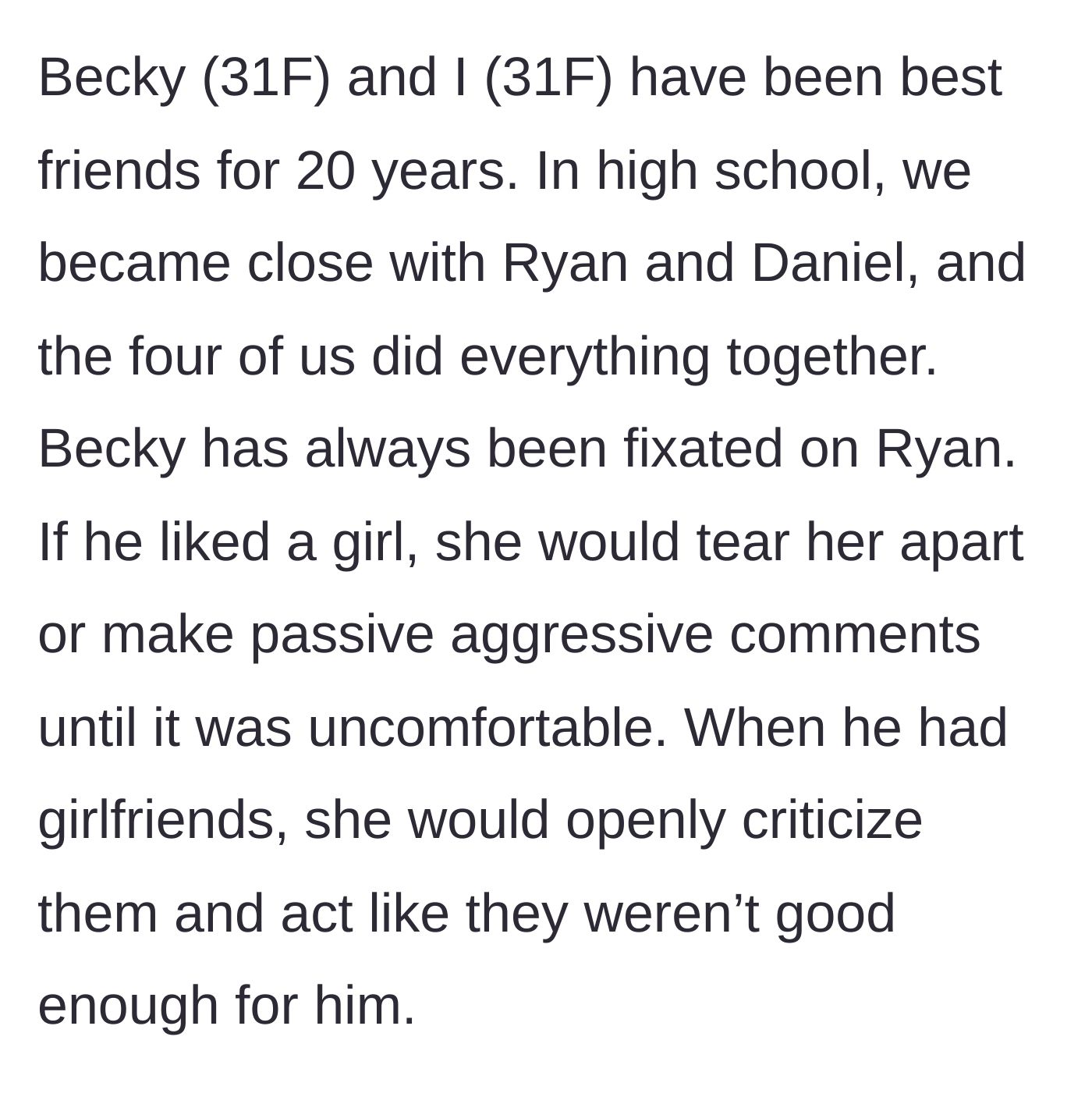
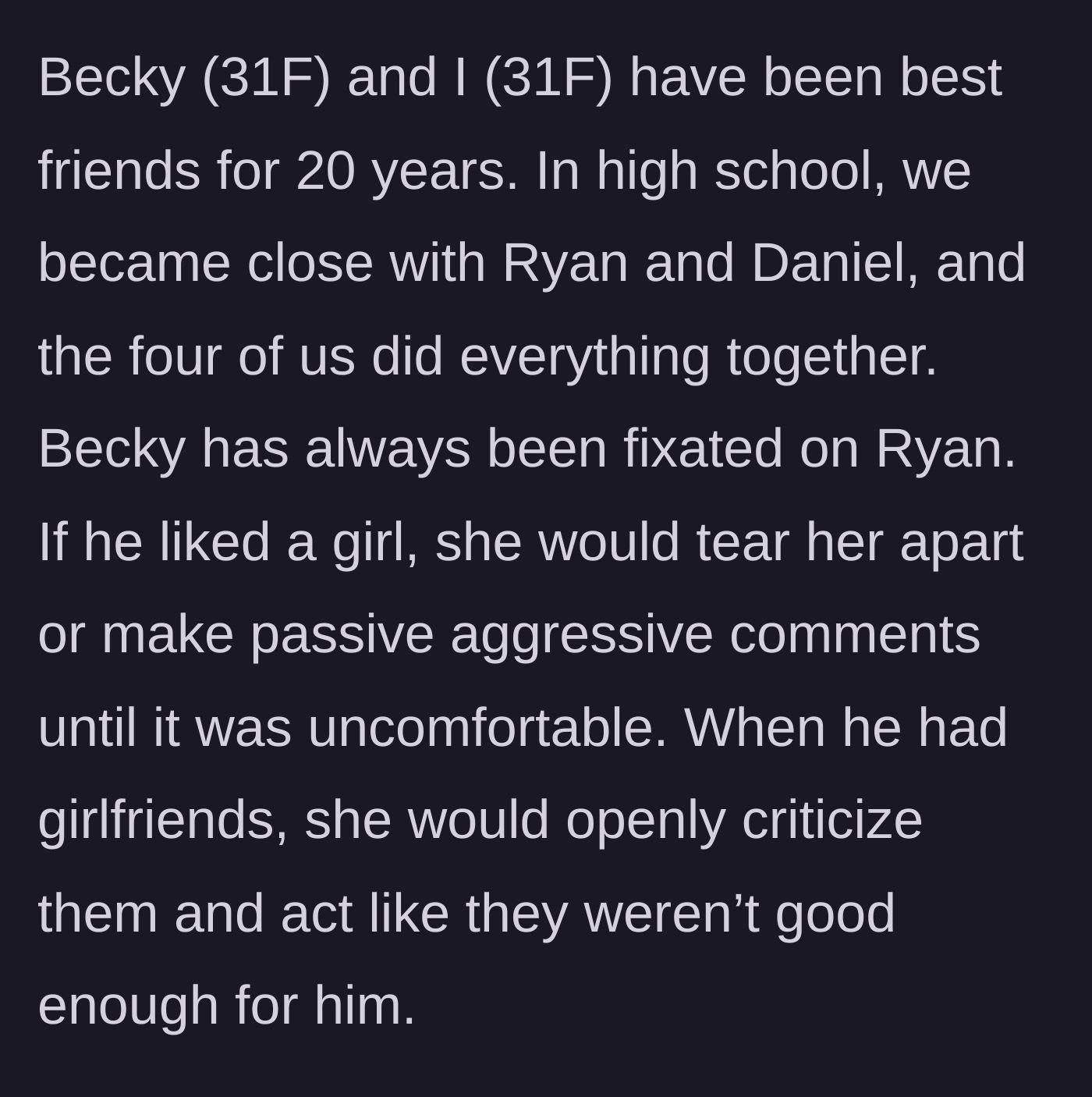
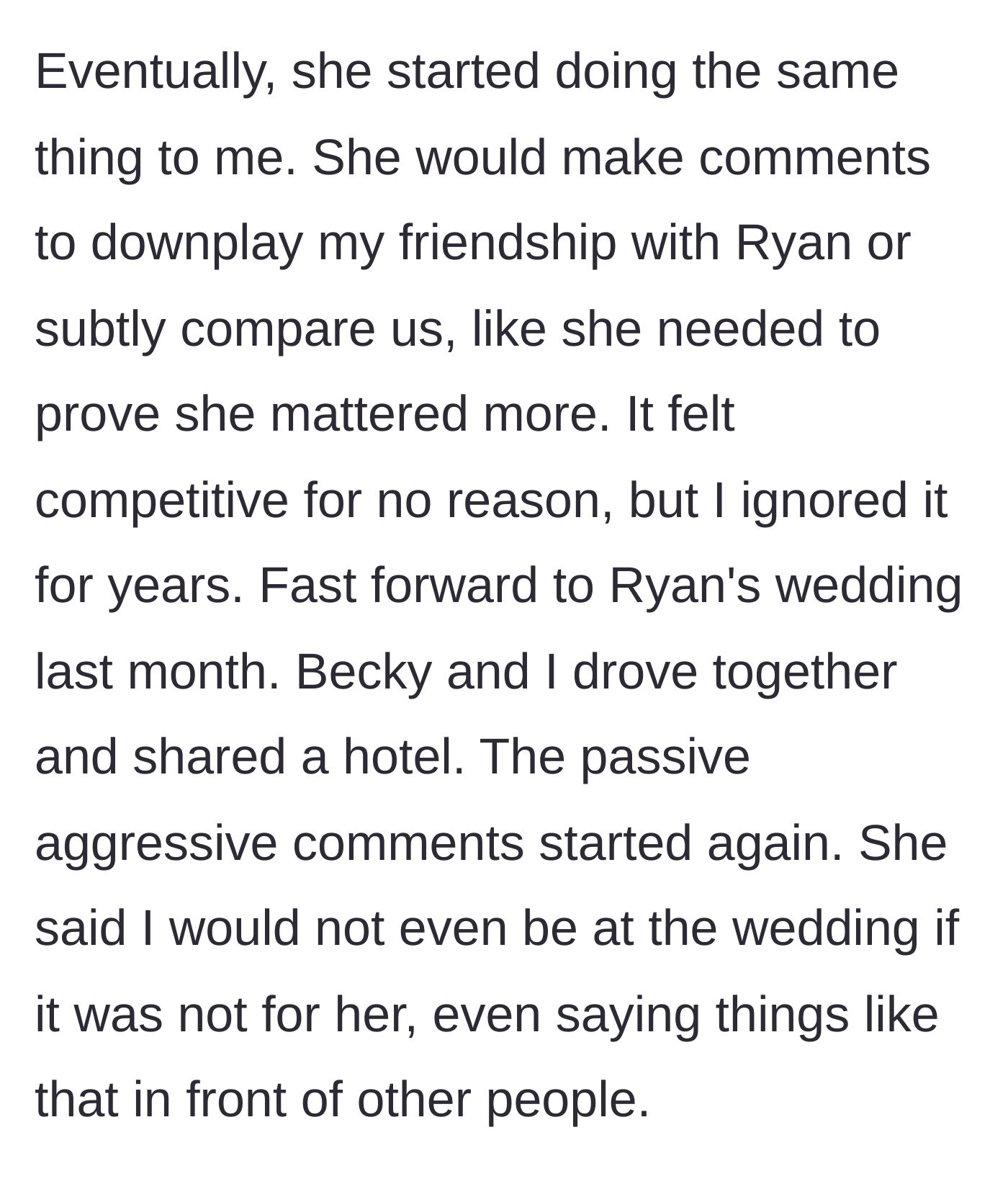
The inevitable pivot. When there are no girlfriends left to terrorize because the man is literally getting married, the entitled friend turns her crosshairs on the closest available target: our narrator. Becky’s need to establish a hierarchy, claiming the narrator wouldn’t even be invited to the wedding if not for her, is a desperate, transparent power play. It’s the logic of a territorial toddler throwing a tantrum at an event where neither of them is the bride.
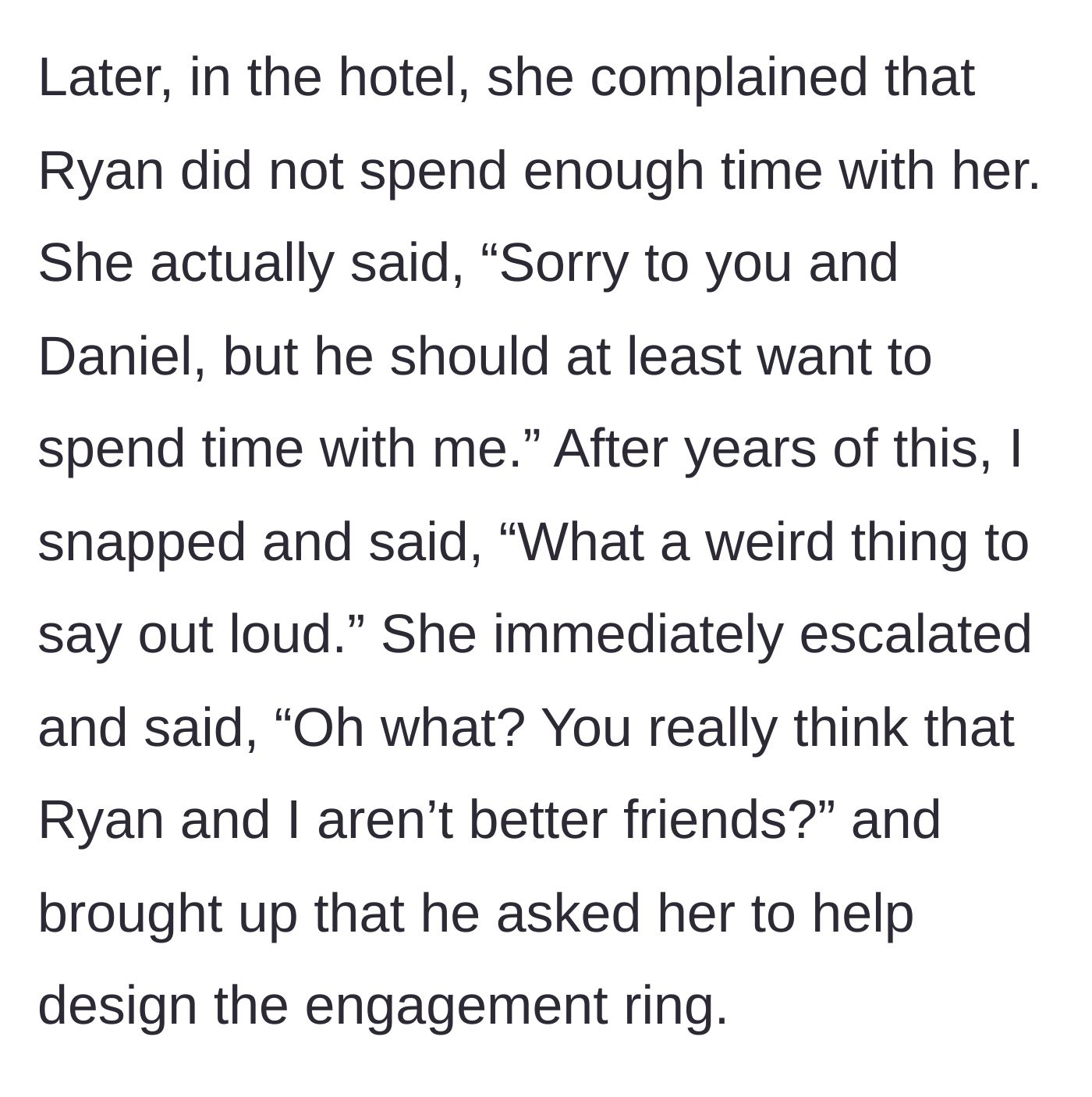
Here is where the entitlement peaks into pure delusion. The man is the groom. His job is to get married, not cater to the ego of his high school sidekick. When the narrator finally applies a microscopic dose of reality (“What a weird thing to say out loud”), Becky’s defense mechanism kicks into overdrive. Dropping the “I helped design the ring” card isn’t just a flex; it’s a pathetic attempt to prove she holds the equity in a relationship that was never hers to begin with.
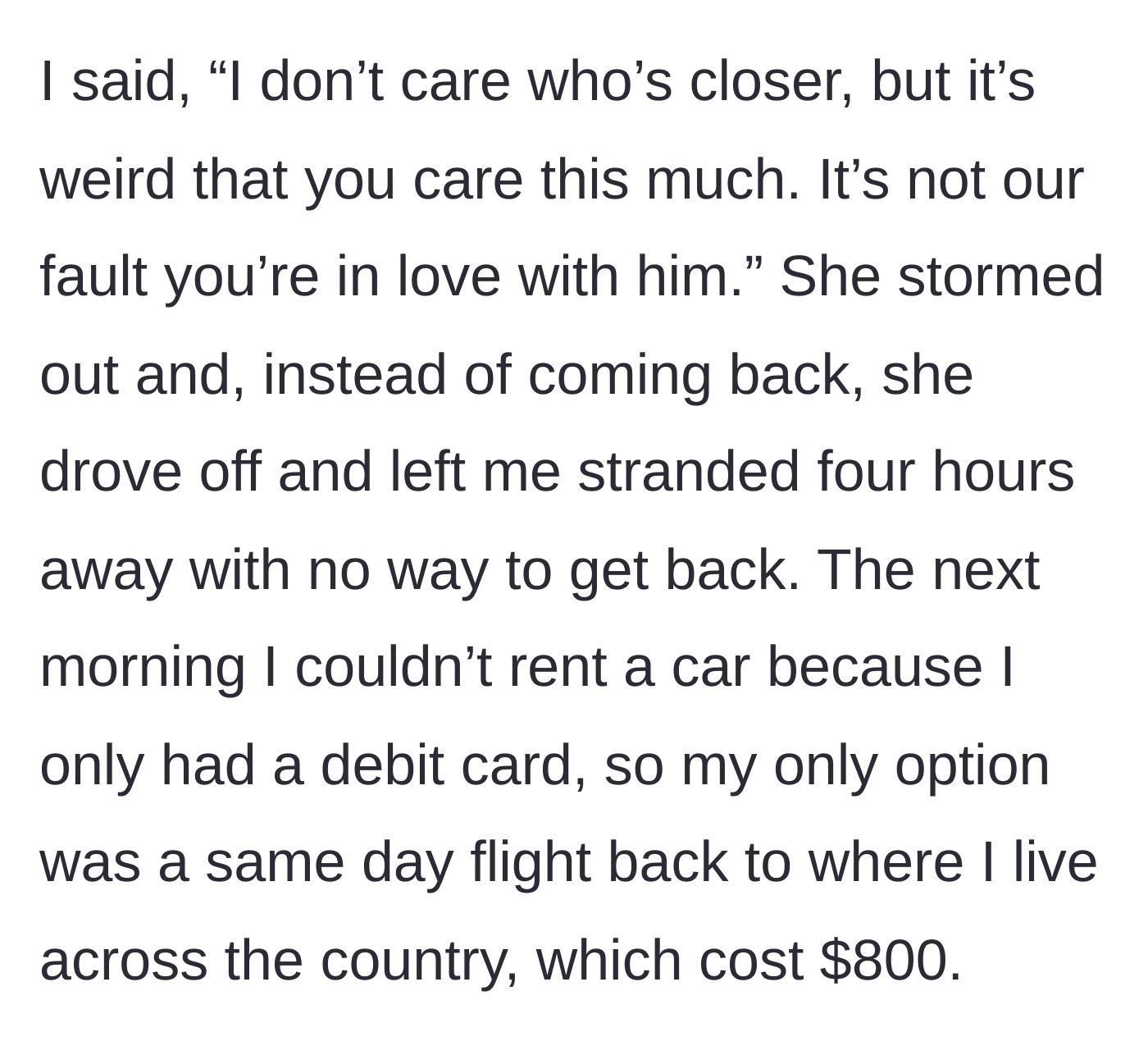
The truth bomb drops, and the emotional bankruptcy is laid bare. Instead of acting like a 31-year-old adult and having a rational conversation, Becky executes the ultimate petty escalation: stranding her supposed best friend four hours from home. This isn’t just an emotional outburst; it’s a calculated, punitive strike. Forcing someone to eat an $800 same-day flight because you can’t handle being called out on your painfully obvious, unrequited crush is the absolute peak of financial and emotional terrorism.
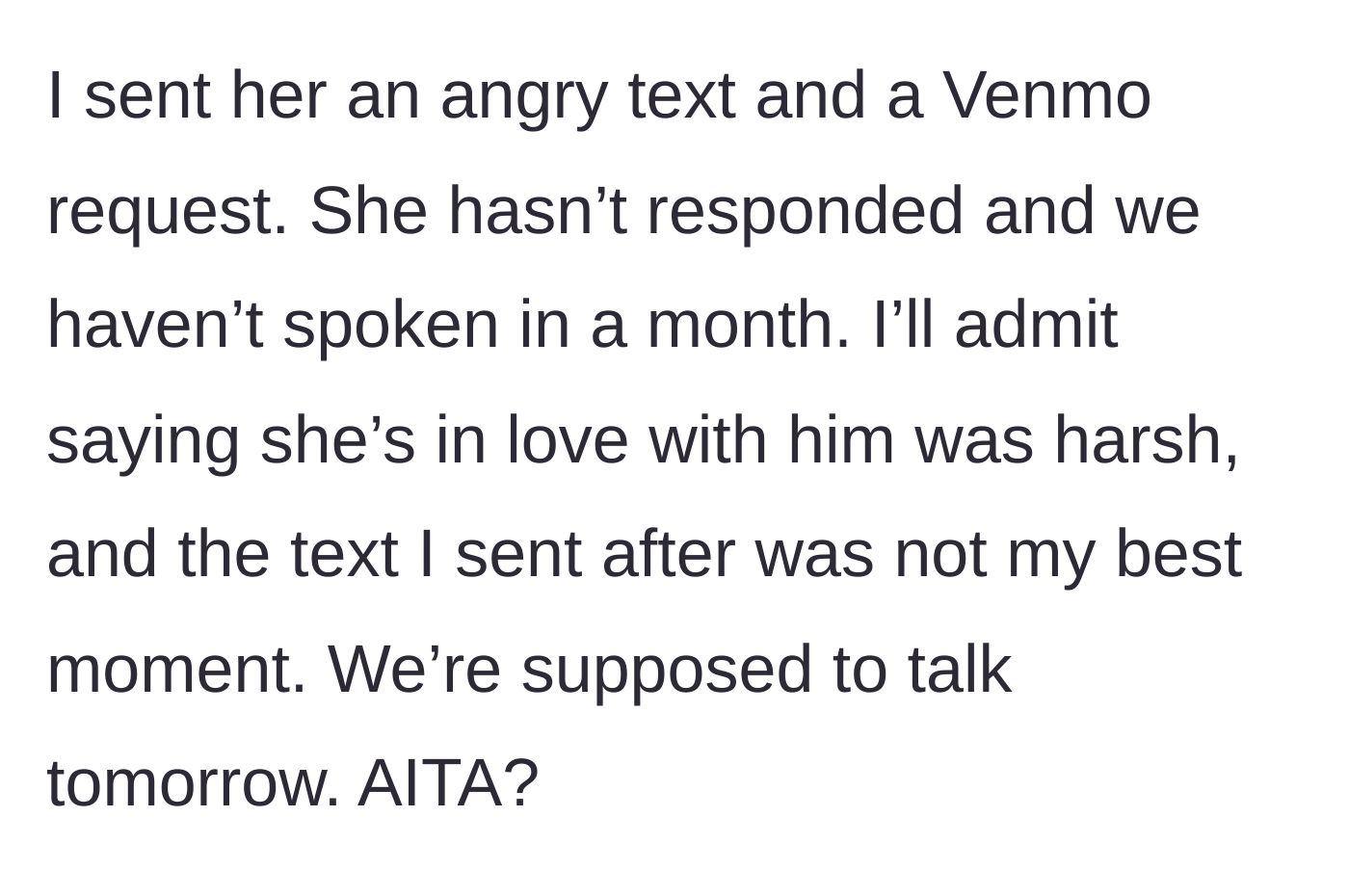
A month of radio silence tells you everything you need to know about Becky’s cowardice. The $800 Venmo request is the exact right, logical move, this is a breach of contract disguised as a friendship dispute. The narrator is questioning if she was too harsh, which is the classic reflex of reasonable people who have been conditioned to tolerate the intolerable. The only thing she should be negotiating tomorrow is the repayment schedule.
The Deep Dive: Dissecting a Two-Decade Delusion
The Cast Breakdown: Who Was the Petty Abandoner in Disguise?
- Our narrator is the classic “truth teller” who was simply pushed too far. For decades, she subsidized Becky’s emotional instability with her silence, playing the dutiful supporting character until the sheer lack of logic and fairness finally forced her to call a spade a spade.
- Becky is the textbook “jealous best friend” and chronic “pick me” girl. She operates under the delusion that longevity equates to ownership, treating a grown man like a piece of property and punishing anyone who threatens her self-appointed spot at the top of the social hierarchy.
The Core Issue: Why This Problem Happens Everywhere
Toxic friendships often survive in the shadows of unrequited love because friend groups are historically terrible at establishing boundaries. We tolerate the jealous best friend because it’s easier than addressing the uncomfortable reality. But when emotional disputes cross the line into tangible financial damage, like leaving someone stranded and sticking them with an $800 travel bill, the unwritten social contract is shredded. It shifts instantly from a messy emotional dynamic to a clear-cut issue of liability and fairness. You can be annoying for free, but you cannot cost people money.
Plot Hole Check: Is This Story Too Wild to Be Real?
You might think someone abandoning their friend of 20 years over a single sentence is fiction, but this narrative checks out perfectly. There are no cartoonish villains here, just the very real, very ugly escalation of an insecure adult backed into a psychological corner. The logistical nightmare of only having a debit card on hand and being forced to eat a high-priced, same-day cross-country flight is exactly the kind of mundane, painful reality that verifies the story.
The Final Update: Will the Invoice Be Settled?
What Happened Next
As of right now, this dispute remains an active standoff. The narrator fired off the $800 invoice, Becky retreated into a month-long silent treatment to avoid accountability, and the impending follow-up conversation hangs in the balance.
The Hard-Earned Lesson
The moral of the story is ruthlessly simple: you cannot invoice someone for twenty years of wasted emotional labor, but you absolutely can, and should, bill them for the tangible costs of their tantrums. The narrator didn’t lose a best friend; she shed a massive liability. The $800 might sting right now, but it’s a remarkably cheap buyout clause for escaping a lifetime of someone else’s unrequited, pathetic drama.
Community Reactions: What People Had to Say
This reader hit the nail on the head by treating the $800 not as a penalty, but as the ultimate severance package. The crowd loved this brutal logic, ignoring a friend’s unhinged behavior for decades doesn’t make it go away; it just guarantees the inevitable explosion will cost you.
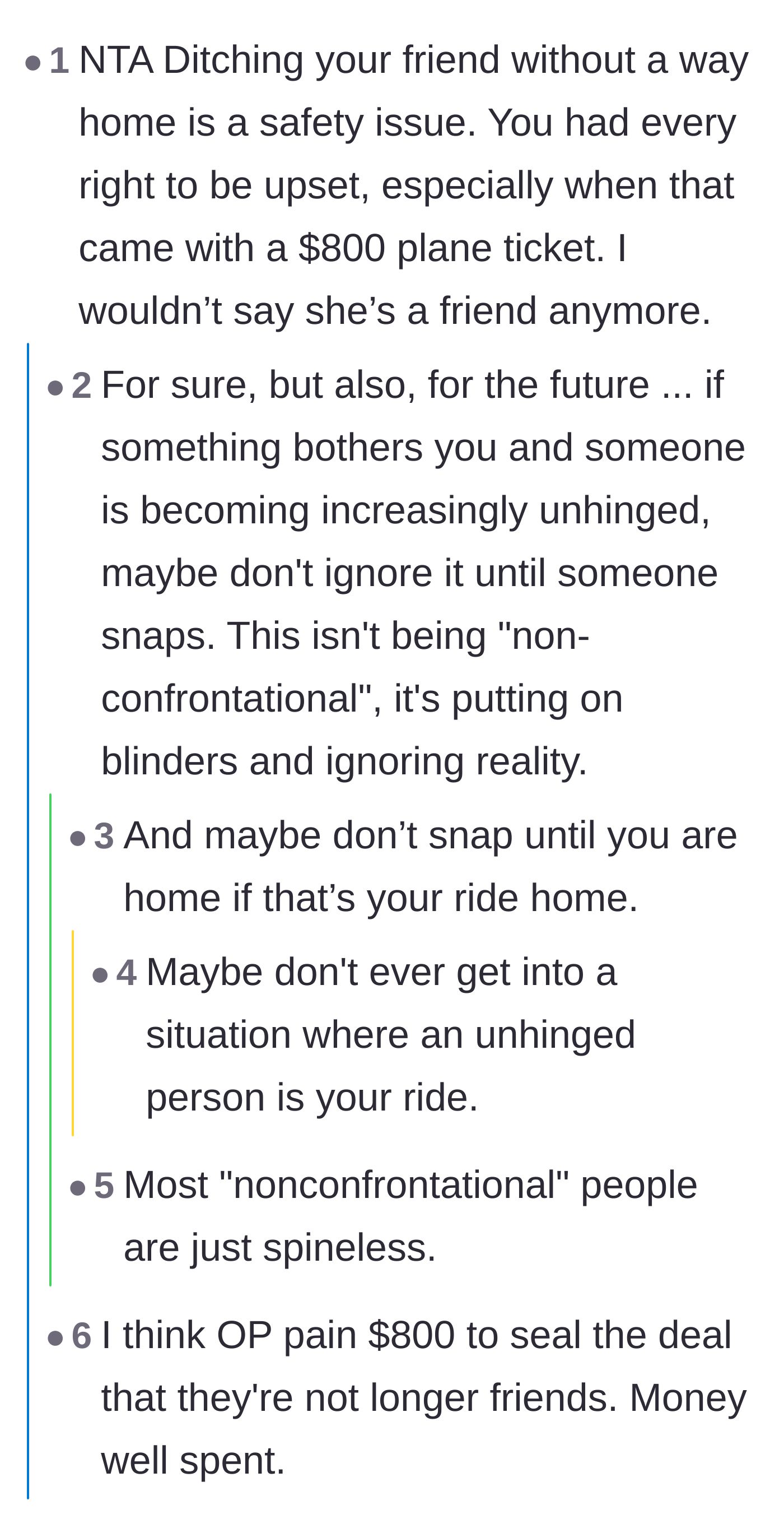
The pragmatic logistics police arrived in full force here to point out the glaring structural flaw in our main character’s story. It is hard to demand fairness when your own lack of basic adult financial planning leaves you completely at the mercy of a petty abandoner.
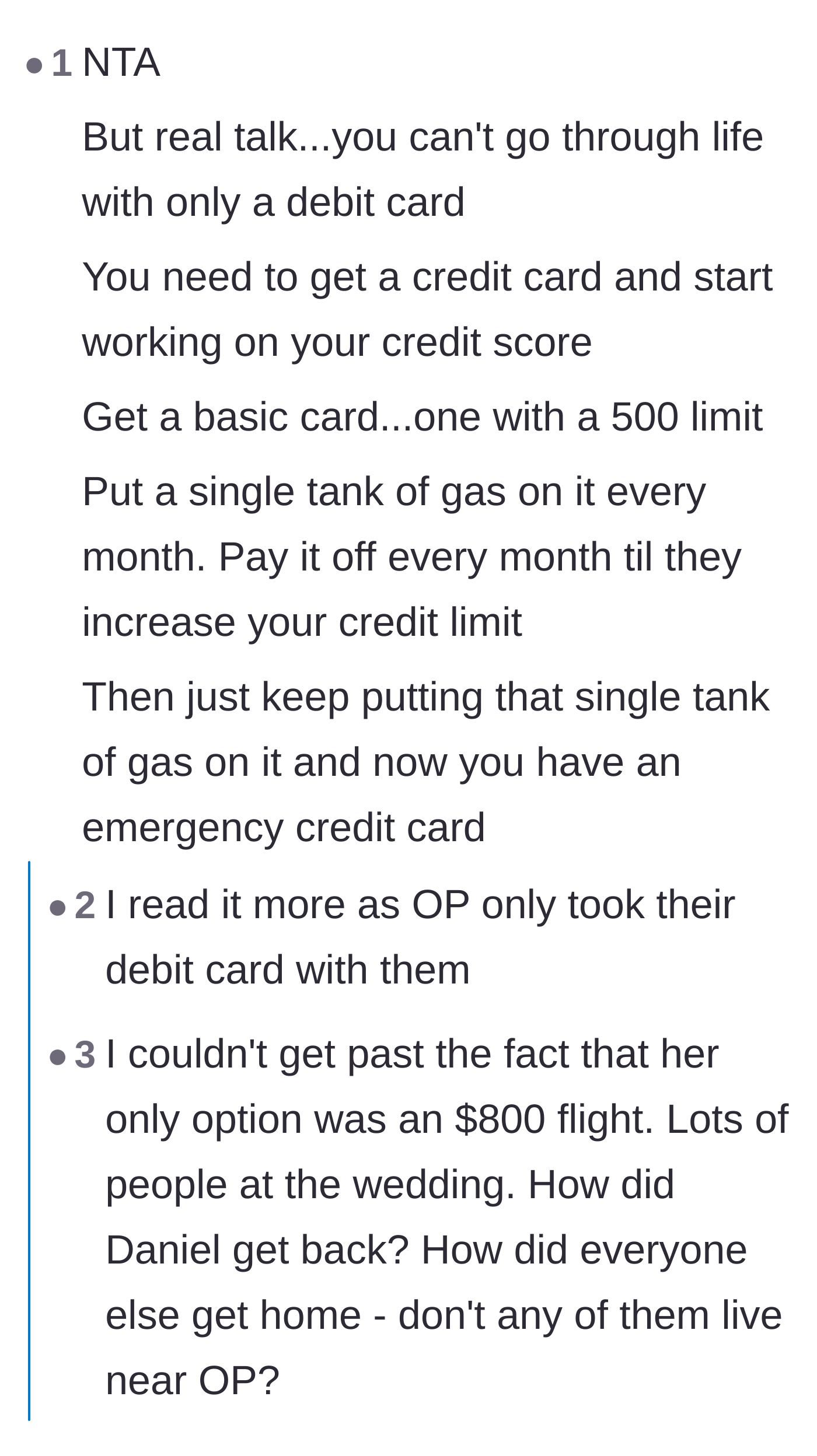
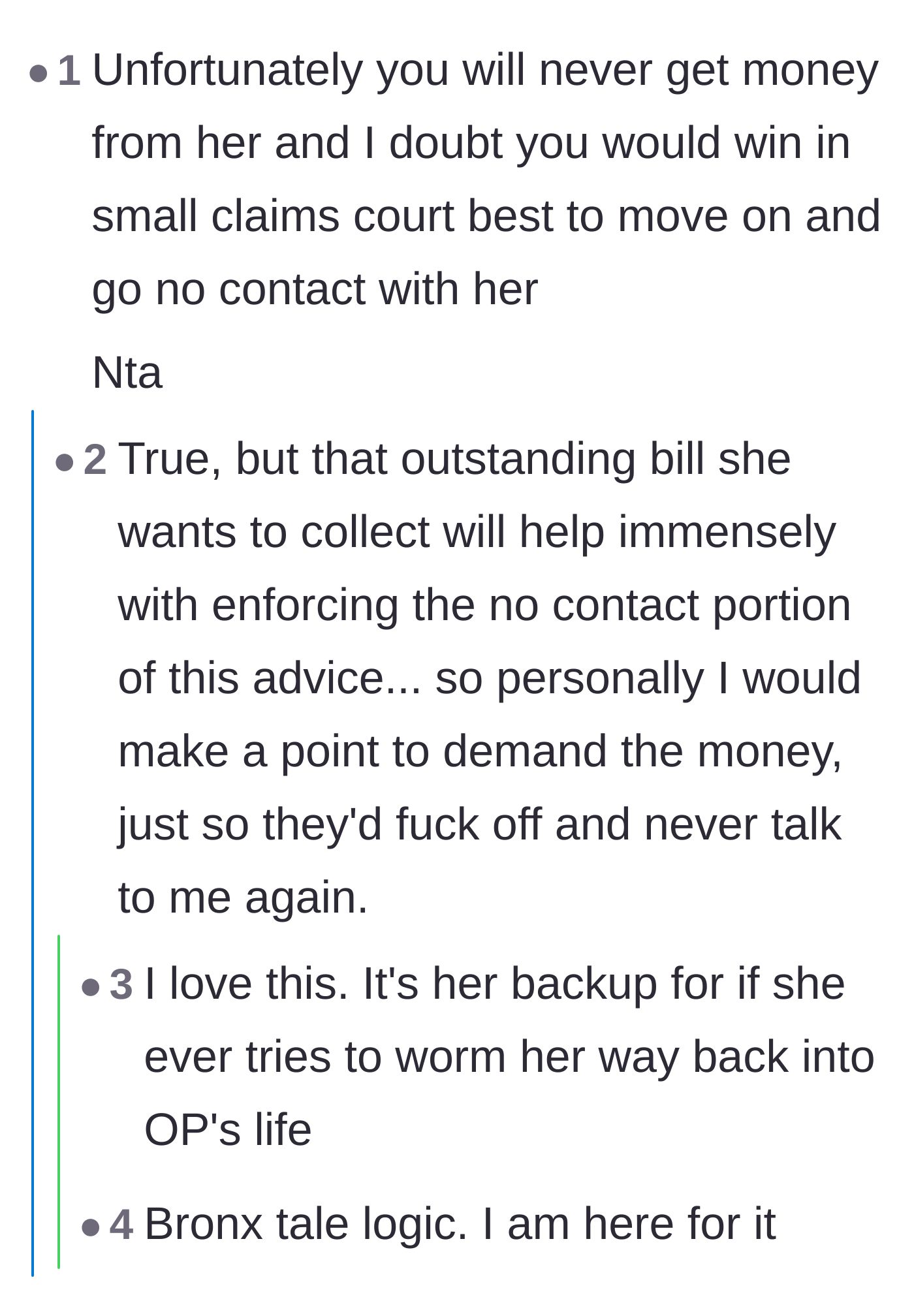
The brilliance of this thread is framing the unpaid debt as a permanent, self-enforcing restraining order. Readers instantly connected with this ruthless logic, letting the petty friend dodge the $800 invoice is the most effective way to ensure she stays too embarrassed to ever contact you again.
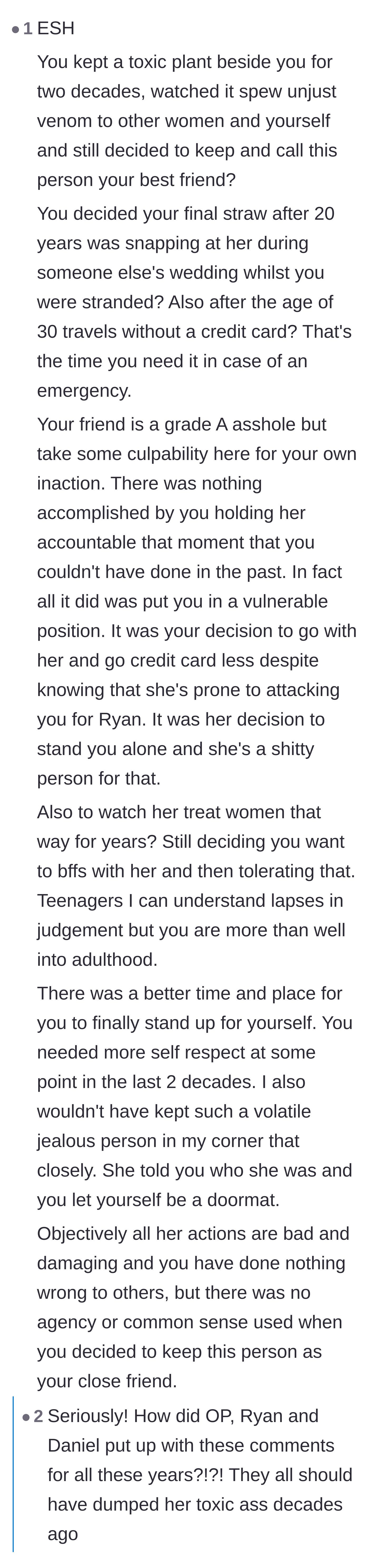
This thread struck a massive nerve because it surgically dismantles the main character’s own two-decade deficit of self-respect. You cannot subsidize a bully’s entitlement for twenty years and then act shocked when she pulls the rug out exactly when you are most vulnerable.
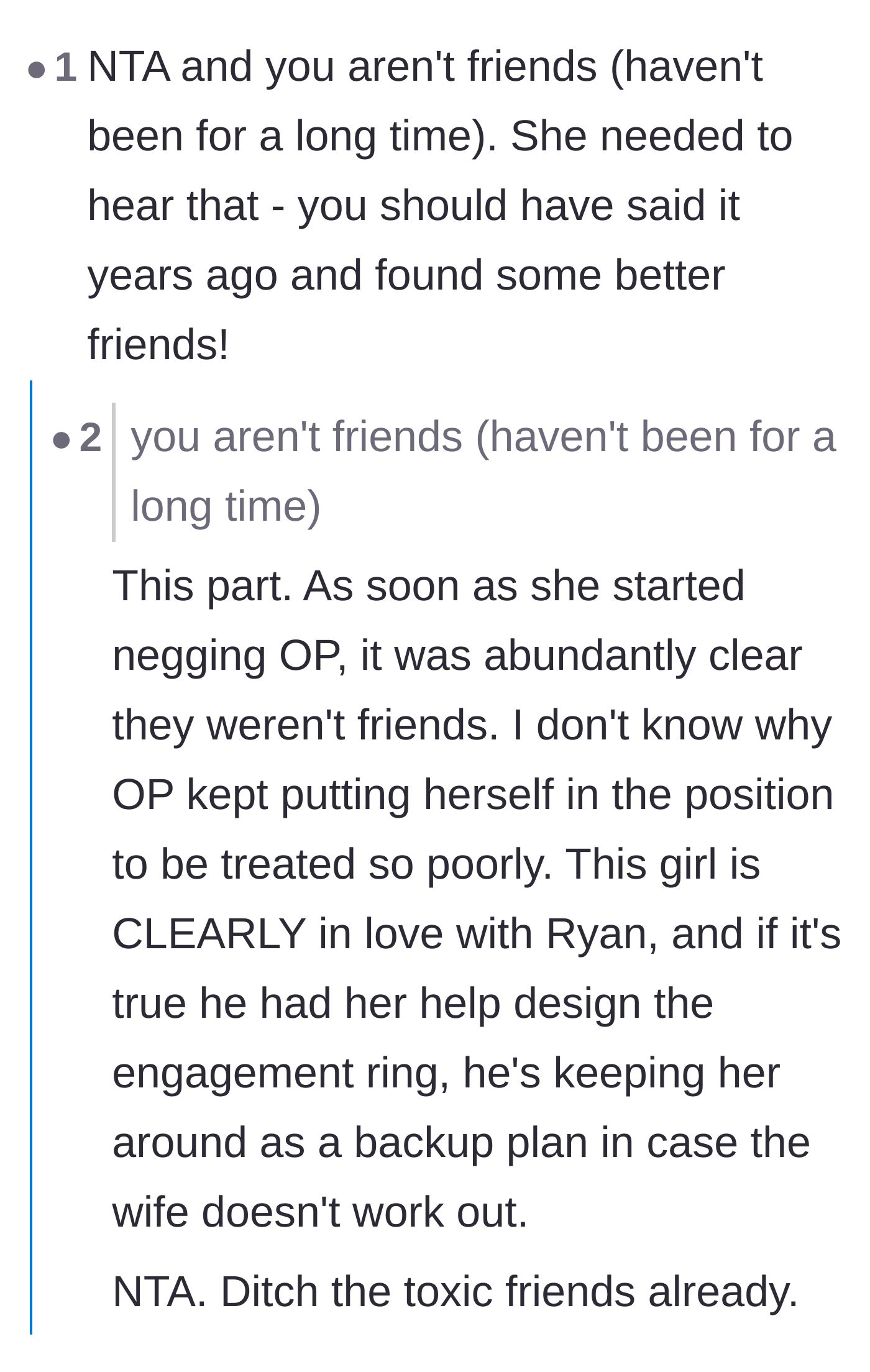
Readers zeroed in on the underlying power dynamics here, correctly pointing out that this hasn’t been a legitimate friendship since the Bush administration. They also rightfully sniffed out the groom’s complicity, because letting your unhinged groupie design your bride’s ring is top-tier enabling behavior.
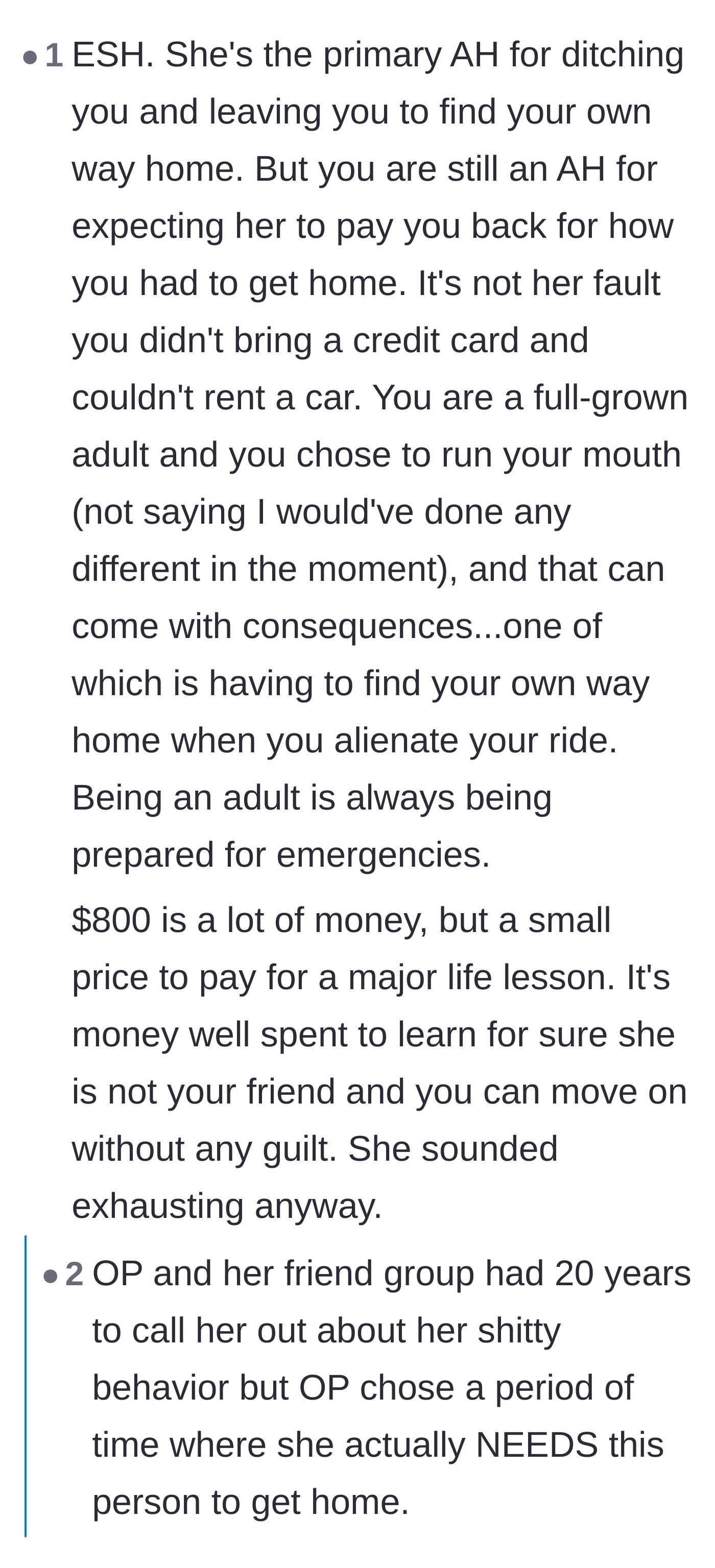
This tough-love verdict resonated hard with the accountability crowd who recognize that actions have immediate logistical consequences. If you finally decide to detonate a twenty-year toxic relationship, you do not get to demand the fallout be financially convenient.
Let’s break down the foundational math here. We have a twenty-year “friendship” built on a glaring power imbalance: Becky’s unyielding, monopolizing obsession with their mutual male friend. Notice how Becky doesn’t just harbor a crush; she actively weaponizes her insecurity, functioning as the self-appointed gatekeeper to his dating life. The sheer entitlement to think she has veto power over another adult’s romantic choices is staggering, yet everyone just let this high school behavior slide into their thirties.